English
Insulated Copper Tube

Author: Site Editor Publish Time: 2026-11-11 Origin: Site


For buyers comparing IXPE vs XPE pipe insulation, the first step is to confirm what each supplier means by the material name. IXPE commonly identifies irradiation-crosslinked polyethylene foam. XPE often refers to chemically crosslinked polyethylene foam in supplier comparisons, although the abbreviation can also be used more broadly for crosslinked PE.
The crosslinking method helps explain how the foam is made. The purchasing decision also needs the finished sleeve’s thermal data, thickness, moisture properties, fit, and installation behavior. Ask for the proposed material grade and supporting specification before comparing prices.
Table of Contents
Crosslinking connects polymer chains into a network. In irradiation crosslinking, energy from a radiation source, commonly an electron beam, initiates the formation of those links. Manufacturers control the process to produce foam grades for different applications.
The resulting properties also depend on the polymer formulation, density, cellular structure, and production conditions. A material identified as IXPE therefore still needs a grade-specific data sheet. Ask whether the report covers the foam used in the proposed pipe insulation.
In chemical crosslinking, a crosslinking agent is incorporated into the formulation and reacts during processing. Manufacturers can adjust the formulation and process to produce different foam properties.
Confirm this meaning when XPE appears on a quotation. Ask the supplier to state “chemically crosslinked polyethylene foam” if that is the intended material. This prevents a purchasing abbreviation from becoming an unclear specification on repeat orders.
Comparison point | IXPE | XPE, when used to mean chemically crosslinked PE |
|---|---|---|
Crosslinking route | Initiated through irradiation, commonly an electron beam | Initiated using a chemical crosslinking agent |
Material identity to request | Polymer formulation or grade and crosslinking method | Polymer formulation or grade and crosslinking method |
Performance evidence | Data for the proposed foam and sleeve construction | Data for the proposed foam and sleeve construction |
Sample checks | Thickness, fit, flexibility, and surface condition | The same checks under equivalent conditions |
Purchasing basis | Verified suitability for the application | Verified suitability for the application |
A layered pipe sleeve may combine a foam body with an inner lining and outer surface. Identify which layer is IXPE or XPE and ask for the materials of the remaining layers.
XLBAODI lists IXPE, XPE, and PEF options for its two-layer PE pipe insulation, subject to configuration. The selected construction should be confirmed with the required bore, thickness, and order details.

Request thermal conductivity with the test method, units, and mean test temperature. Compare results measured under equivalent conditions. Also ask whether the sample was the foam alone or the finished layered product.
Check the actual foam thickness separately from the complete sleeve wall. An outer surface and inner lining can contribute to total wall thickness. A section drawing helps establish how much of that dimension belongs to the insulation body.
For cold piping, use the relevant equipment and project requirements to assess the proposed construction. Where a condensation assessment is needed, provide the line temperature, ambient temperature and humidity, pipe size, and installation conditions.
Request water-absorption and water-vapor information where required by the project. Review the test conditions and confirm that the documentation applies to the proposed material. These properties describe different aspects of moisture exposure and should be evaluated separately.
The installed system also includes joints, terminations, supports, and any cut or damaged surfaces. Confirm the compatible sealing and repair method. During sample approval, inspect how the sleeve finishes at these details and whether the protective surface remains continuous.
Ask for the service-temperature range of the complete construction, including any lining, outer layer, and joining materials. Clarify whether the limit applies to continuous service or a short exposure and which dimensional or performance criteria were used.
If the project requires a fire classification, obtain the corresponding report and check the tested product, thickness, facing, and mounting conditions. Record the accepted construction in the purchase specification so later orders can be checked against it.
Provide the actual copper outside diameter and ask the supplier to confirm the sleeve bore and fit allowance. Trial the sleeve on representative tubing using the intended installation procedure.
Check whether it can be fitted without excessive stretching, tearing, or bunching. Inspect the bore-facing surface after fitting and at cut ends. A sleeve that fits a straight tube should also be checked through the bends used in the project.
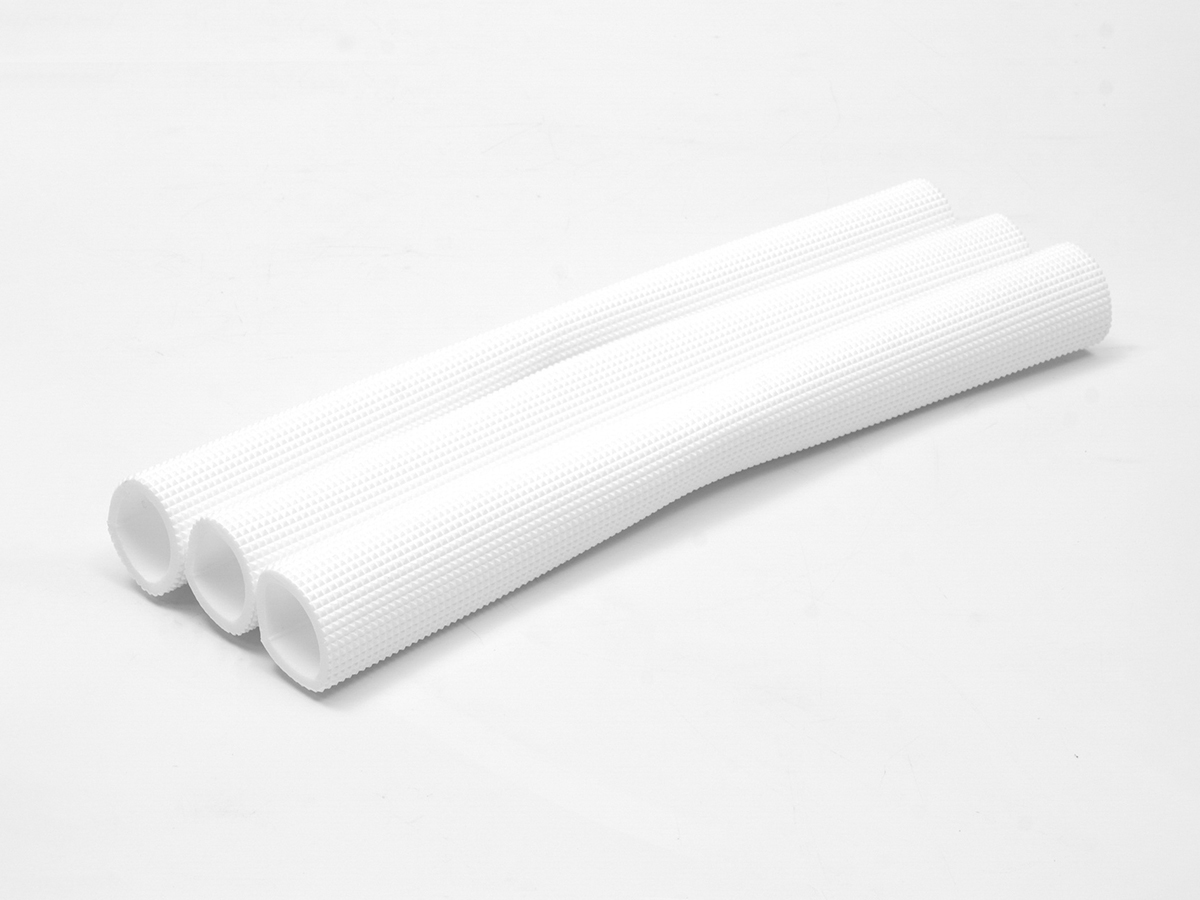
Foam density alone gives an incomplete picture of stiffness and recovery. If these characteristics matter, compare relevant compression data using equivalent test conditions and evaluate the finished sleeves.
Inspect areas that contact supports or pass through restricted openings. Look for lasting flattening or visible damage after the handling trial. Review the support arrangement if the insulation becomes heavily compressed at contact points.
In a multilayer sleeve, installers handle the outer surface. Its condition can affect how the product withstands pulling through openings and positioning in trunking. Examine the sample after a representative installation trial for abrasion, splits, or separation between layers.
XLBAODI’s published three-layer insulation construction combines an LDPE lining, IXPE foam, and a PE outer layer. For a proposed XPE alternative, request the complete layer specification so the comparison covers both foam and finished sleeve.

Start with a common bore, foam thickness, finished dimensions, and application brief. Include the installation environment and any thermal, moisture, temperature, or fire requirements.
State whether you need insulation sleeves alone or copper tubing supplied with insulation. For a paired line set, provide both tube sizes and the insulation requirement for each leg. The single or twin arrangement is a separate specification from the foam’s crosslinking method.
RFQ field | What buyers should provide or request |
|---|---|
Material identity | Meaning of IXPE or XPE, crosslinking method, and proposed grade |
Construction | Foam body, lining, outer surface, and joining method where relevant |
Dimensions | Bore, foam thickness, total wall thickness, finished profile, and tolerances |
Operating conditions | Line temperature, ambient conditions, and indoor or outdoor exposure |
Technical evidence | Applicable thermal, moisture, temperature, and fire documentation |
Installation checks | Tube fit, representative bends, surface condition, and compression behavior |
Supply terms | Length, quantity, markings, packaging, destination, and lead time |
Align the technical requirements before comparing unit prices. Check whether quotations include the same lengths, packaging, markings, testing, and supply format. Account for any additional protection or finishing materials required by the installation.
For repeated work, trial a sample on a representative route. Record fitting time, damage, usable offcuts, and the condition of completed joints. These observations can help determine whether a lower material price translates into a lower installed cost.
Retain the approved sleeve sample with its material reference, drawing, and document list. Define the incoming checks for dimensions, surface condition, identification, and consistency with the approved construction.
Ask the supplier to identify proposed material or construction changes before production. Review changes to the foam, density, thickness, lining, or outer layer against the performance and fit requirements established during approval.
Select between the actual grades being offered. Compare thermal data, thickness, moisture properties, fit, and handling under equivalent conditions. The preferred option is the one that meets the application requirements and purchasing specification.
IXPE uses irradiation to initiate crosslinking. Chemically crosslinked PE uses a crosslinking agent during processing. Confirm that the supplier uses XPE in this chemical-crosslinking sense.
Request comparable test data for the proposed materials. Conductivity is affected by the formulation, density, cellular structure, and test temperature. Use the reported value together with the specified foam thickness.
Review the substitution against the approved construction and project requirements. Confirm the relevant performance documentation, fit, and installation behavior, and obtain any approval required by the project specification.
Provide the copper tube outside diameter, required foam thickness, operating conditions, sleeve length, quantity, and supply format. Include relevant testing, exposure, marking, and packaging requirements, plus an approved sample or drawing if available.
Comparing foam options for an HVAC project or distribution program? Send your insulation specification to XLBAODI to discuss the proposed IXPE or XPE configuration and sample requirements.


